
Visual impairments affect more than 192 million people in the United States, with conditions such as myopia, dry eye, cataracts, glaucoma, diabetic retinopathy, and age related macular degeneration among the leading causes of vision loss. Much of what is known about these diseases, including current treatments and clinical management, has resulted from research supported by the National Eye Institute. Continued translational vision research remains essential to advancing our understanding of disease mechanisms and developing improved therapies to preserve and restore vision.
P30 Core Grant
The Core for AcceleratiNg Vision Science in Atlanta InstitutionS, known as CANVAS, is a National Eye Institute funded P30 service core that supports translational vision research across the Atlanta Vision Research Community (AVRC). AVRC includes investigators at Emory University, Georgia Institute of Technology, Georgia State University, the Atlanta VA Medical Center, and Morehouse School of Medicine.
CANVAS provides shared resources, services, and expertise to support NEI funded research projects, assist faculty preparing to submit R01 applications, and foster collaboration across institutions. Through these efforts, CANVAS strengthens research infrastructure and accelerates vision science discoveries across the Atlanta region.
CANVAS Service Core Modules
These three service core modules support scientific discovery across the AVRC. Select a module below to learn more.
e.
-
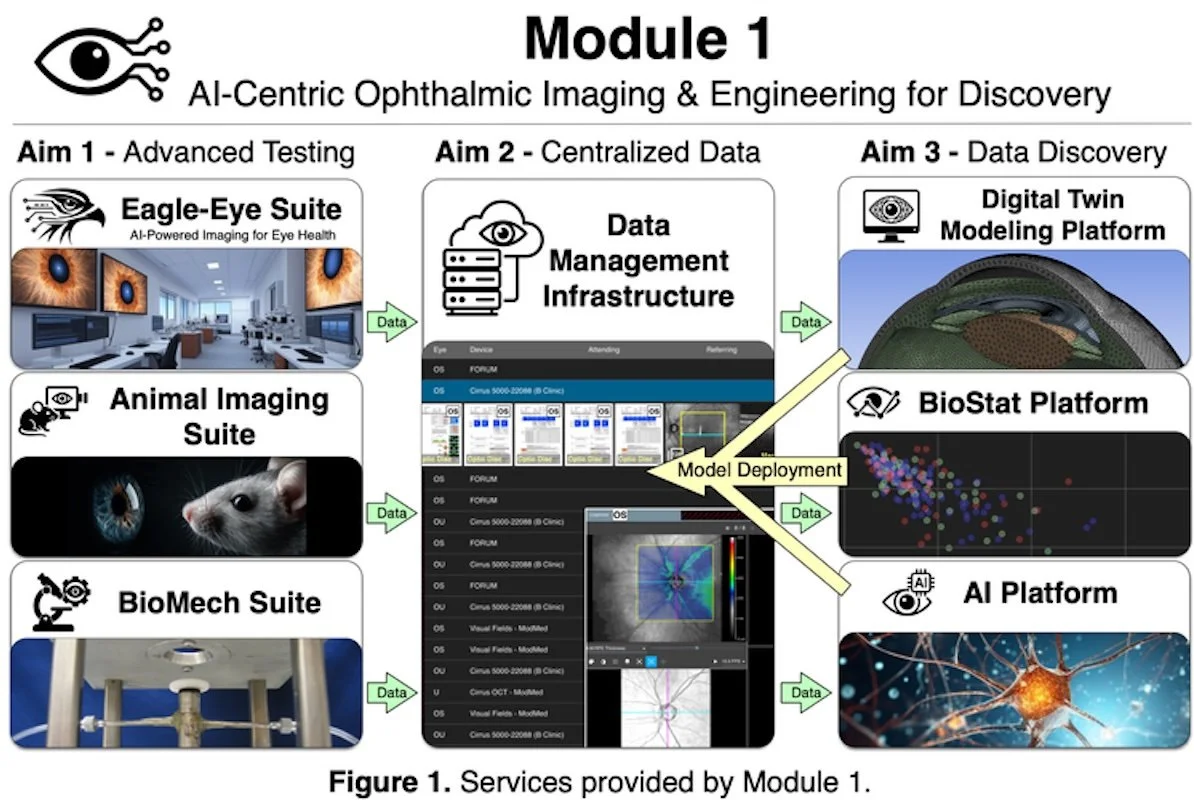
This module provides access to advanced ophthalmic imaging and engineering resources to support both preclinical and translational vision research. Module 1 will:
Provide access to cutting-edge ophthalmic in vivo imaging and scalable biomechanical testing platforms for animal and human research
Offer a centralized data management infrastructure to support patient imaging and facilitate collaborative, high-impact research
Maintain state-of-the-art artificial intelligence, biostatistics, and computational tools to uncover disease mechanisms, extract biomarkers, and support discovery
Together, these efforts lower barriers to entry, standardize research workflows, foster collaboration between clinicians and scientists, and accelerate discovery in ophthalmology.
-
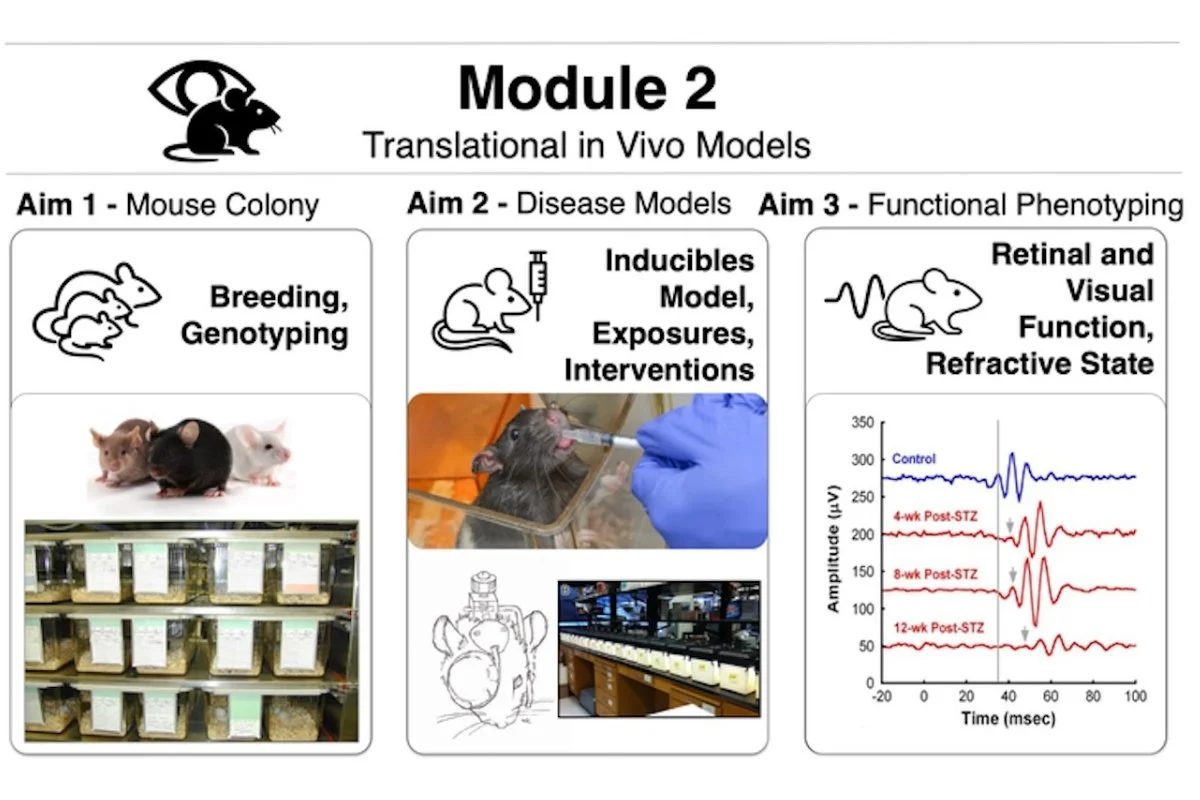
This module supports the use of in vivo models for studying ocular diseases and therapeutic interventions. Module 2 will:
Offer centralized resources for animal breeding services, genotyping, and phenotyping
Provide training and resources to develop small animal models of ocular diseases, including retinal degenerations, glaucoma, myopia, and diabetic retinopathy, as well as exposure to environmental risk factors such as cigarette smoke, ambient light exposure, or exercise
Supply equipment for functional phenotyping, including electroretinography, optomotor tracking, and photorefraction
This infrastructure enables robust translational research that bridges discovery from bench to bedside.
-
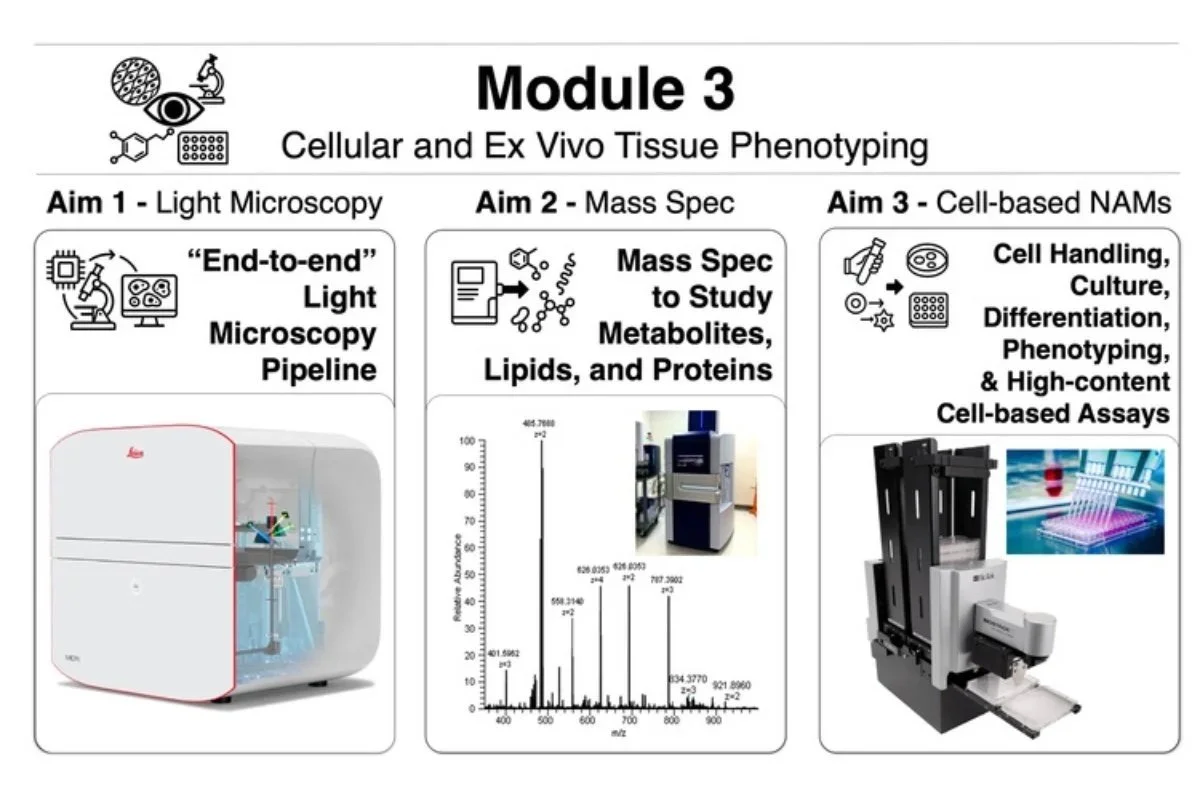
This module enhances the capability for studying and characterizing cells and ex vivo ocular tissues. Module 3 will:
An end-to-end light microscopy service, including equipment and expertise for sample handling, preparation, staining and labeling, and image acquisition, processing, and analysis
Training and support in mass spectrometry–based techniques, with access to equipment that enables sensitive and precise study of metabolites, lipids, and proteins in ocular cells and ex vivo tissues
Equipment and expertise to facilitate cell culture, including the development and use of high-content cell-based screening platforms using both molecular and functional assays
Together, these services support the elucidation of fundamental mechanisms underlying ocular physiology and pathophysiology and accelerate the discovery of novel therapeutics for the treatment of ocular disease.
Administrative Core
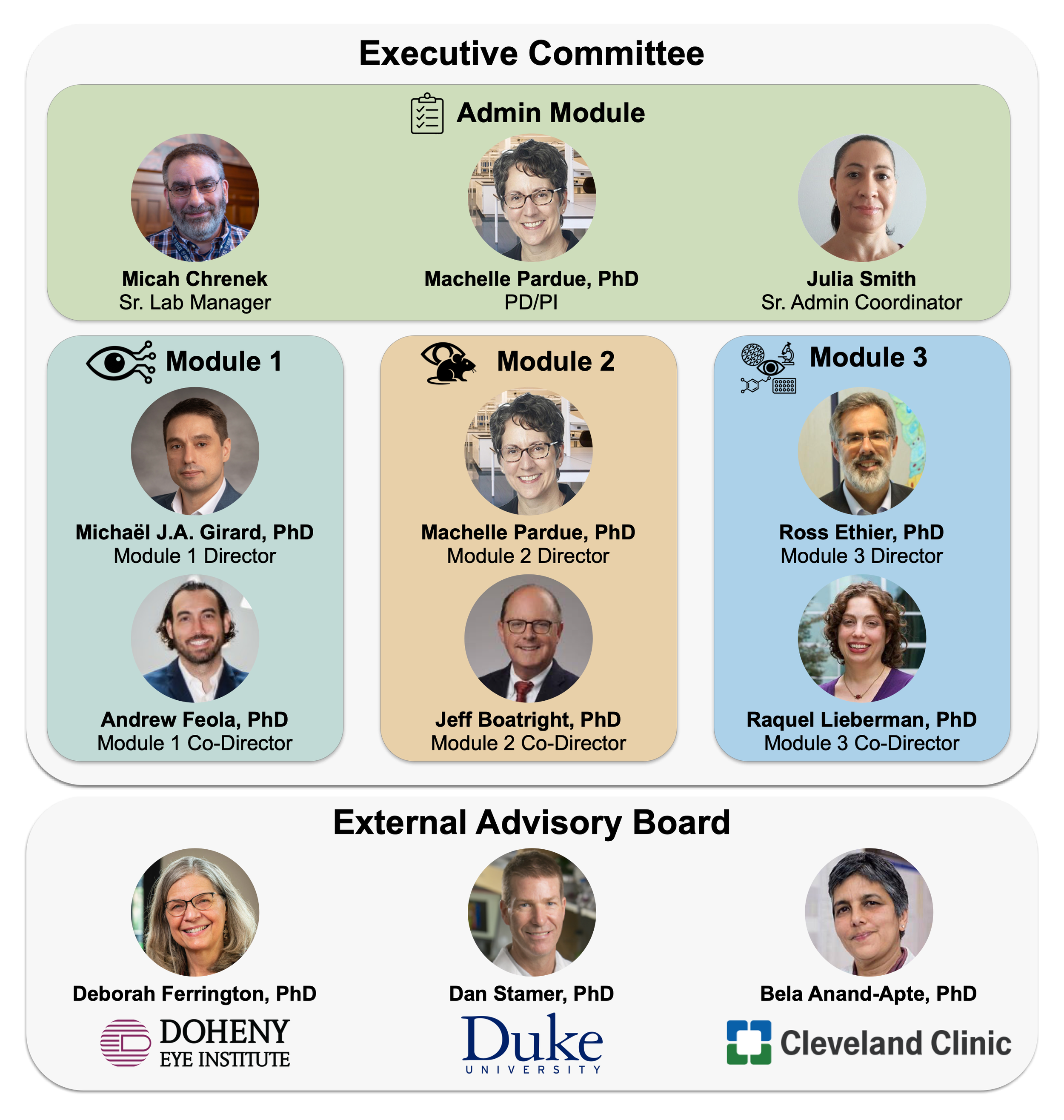
To promote collaboration among AVRC members and affiliate institutions, the Administrative Module organizes events and activities that support data sharing, grant review, scientific presentations, and strategic planning for the research community. The Administrative Module team includes Dr. Machelle Pardue, who serves as PD and PI and oversees all elements of CANVAS including communications, events, financial discussions, and evaluation of module activities. Mr. Micah Chrenek, who serves as Senior Lab Manager and provides oversight and maintenance of equipment, collects usage data, supports onboarding of new researchers, and monitors supplies. Ms. Julia Smith, who serves as Senior Research Administration Coordinator and assists with communications, event planning, financial management, and maintenance of the AVRC website.
CANVAS P30 Organizational Structure
Administrative Core Responsibilities
Event Planning
We organize events that support research dissemination and feedback, including a weekly data sharing session, a monthly Distinguished Vision Research Seminar Series, a Fall retreat focused on specific themes, and a Spring symposium.
These events promote scientific exchange, networking, and collaboration across the AVRC.
Resource Management
We provide oversight of the P30 service modules and their resources to ensure access for all AVRC members, with priority given to NEI R01 funded investigators.
Oversight includes monitoring service usage, meeting quarterly with module leadership to review budgets and reports, and engaging the CANVAS external advisory board.
Communication
We provide AVRC members with information on local, national, and international developments in vision research, including announcements of talks, seminars, conferences, and retreats, funding opportunities, and changes in NIH policies.
Information is shared through the AVRC listserv, and the AVRC website consolidates resources related to P30 and T32 awards.