
Module 2: Translational In Vivo Models
Director: Machelle T. Pardue, PhD; Co-Director: Jeffrey H. Boatright, PhD
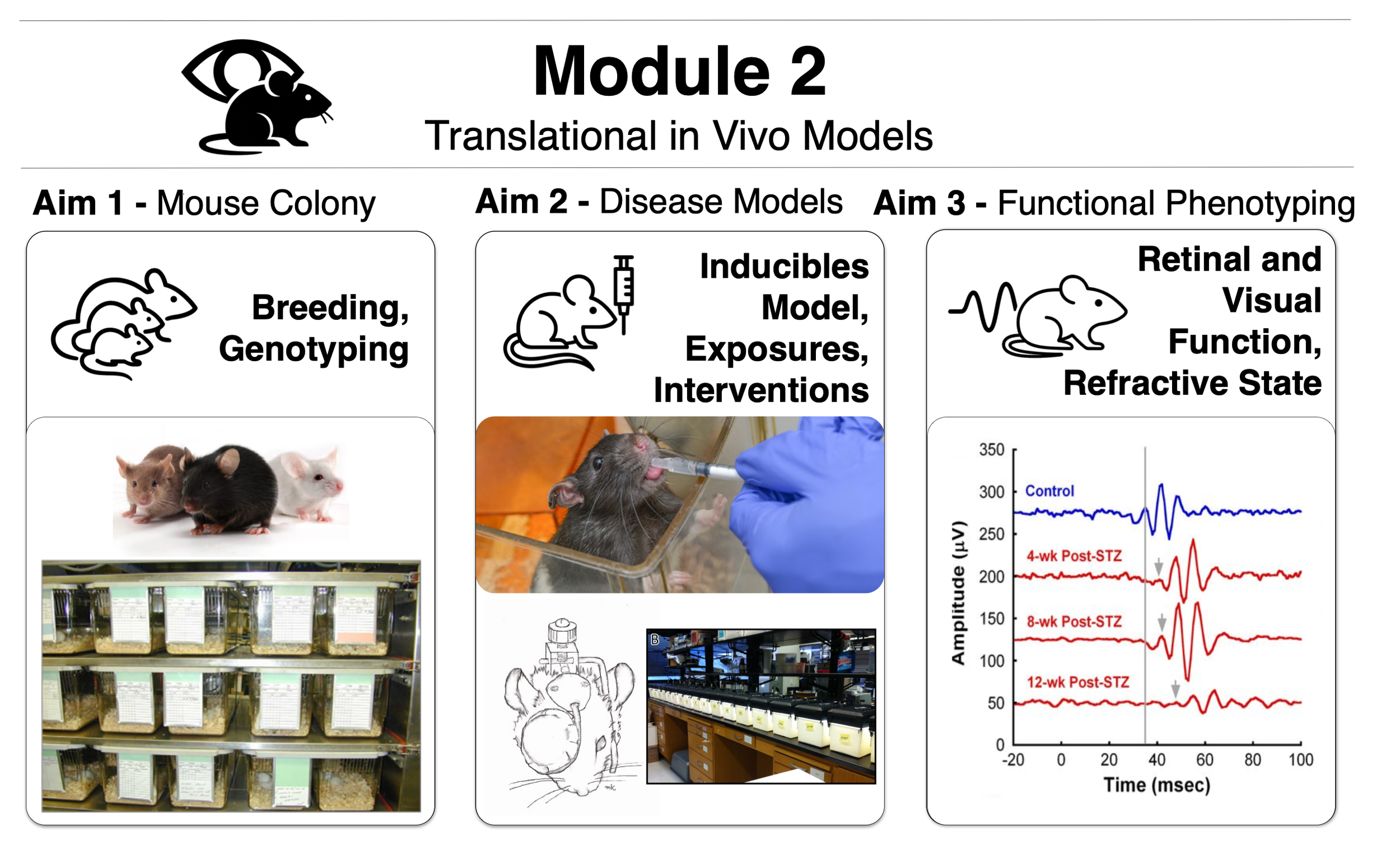
Animal models are essential for translating vision research discoveries into therapies that preserve or restore sight. Because animal visual systems are intact and measurable, they allow investigators to study disease mechanisms, environmental influences, and therapeutic responses in ways that other model systems cannot. For nearly forty years, Emory Ophthalmology has developed and refined animal models of leading causes of blindness, including inherited retinal degenerations, glaucoma, diabetic retinopathy, and myopia.
Module 2 consolidates these established small animal models and functional outcome measures into a single, coordinated core within CANVAS. By centralizing resources for animal breeding, training, and functional phenotyping, Module 2 provides investigators across the Atlanta Vision Research Community with standardized workflows, hands on training, and access to specialized equipment. These shared services support induced and environmental disease models, functional assessment of vision and refractive outcomes, and collaborative use across institutions. Through this integrated approach, Module 2 strengthens translational research and accelerates the development of vision preserving therapies.